TFT Bulletin #13 | March 25, 2026
|
|
|
I often worry that my intro thoughts for the TfT Bulletin are redundant. How many ways can I say the same thing? One of these “same things” is the formational power of habits and practices.
The thing is, I deeply believe that our habits and actions form us and shape the world … in good ways … and not so good ways. It seems wise for Christian schools to create many opportunities for students to practice habits that form a human who desires God’s Kingdom.
While the concept of faith formation in Christian schools can be complex, there is a simplicity in the formational power of habits and practices. And within the simplicity is a syncing of one’s identity and one’s practices.
James Clear, author of Atomic Habits, provides this perspective of habits and identity:
|
Improvements are only temporary until they become part of who you are.
|
- The goal is not to read a book, the goal is to become a reader.
- The goal is not to run a marathon, the goal is to become a runner.
- The goal is not to learn an instrument, the goal is to become a musician.
|
Every action you take is a vote for the type of person you wish to become. No single instance will transform your beliefs, but as the votes build up, so does the evidence of your new identity.
|
As a Christian educator, I find perspective and comfort in what Clear shares. His words remind me of the focus of our learning experience. They invite me to be faithful in my lesson design: consistency is what will shape the learners. Finally, I am reminded that I don’t do this work alone—the “votes build up” as we partner with our colleagues, with the Church, and with parents.
|
|
|
|
TfT Winter Masterclass: Throughlines
|
As we wrap up the first offerings of Winter Masterclasses, we share some work from the Throughline Masterclass led by Matt Berka of Southwest Christian High School. This Masterclass considered how the TfT Core Practice of Throughlines can shape a unit from the ground up, providing direction and coherence to the content itself and other TfT practices.
Each session of this Masterclass focused on a different part of that journey: framing a unit, building a unit, reflecting during a unit, and closing a unit. These slides share some course content and classroom practices that aim to put Throughlines front and center.
|
|
|
|
TfT in the News: King's Academy
|
|
|
|
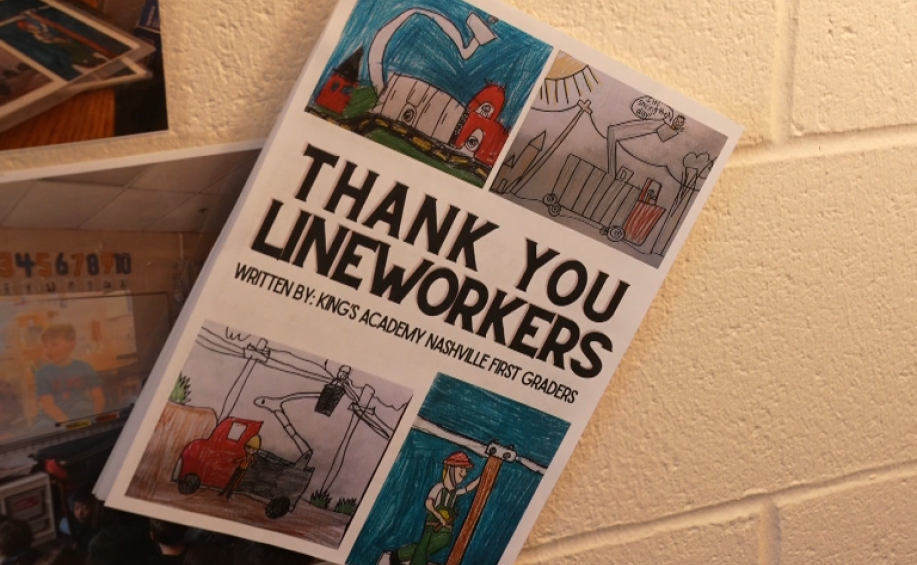
We know that both teachers and students in TfT schools develop a lens for identifying “real needs” the more they engage in FLEx. One recent example occurred for the first-grade students at King’s Academy in Nashville.
After a terrible ice storm hit Tennessee, during which thousands in Nashville lost power for multiple days with temperatures well below freezing, first graders in Leah Sutphen’s and Caroline Dansby’s classes looked to care for those who were helping make things better during the ice storm. A local news station shared the story, and the news team even spent time discussing the concept of “real people” at the end of the story.
|
|
|
|
Teaching for Transformation: New Zealand Adventist Education
|
Partnering with New Zealand Pacific Adventist Education in the implementation of TfT has been both a personal blessing for me and an organizational blessing for the continual development of TfT. This is not a typical partnership as we are adapting the Early Adopter model to an entire system of schools. Not only did we have early adopting staff, but we also have early adopting schools.
NZ Adventist Education is currently in year three of an implementation journey involving nine collaborating schools. Attached is a photo essay of the January gathering in which schools came together in either Auckland or Wellington for three days of fellowship, collaboration, and design. What a delight to see TfT take root so strongly within the context of New Zealand Adventist Education.
|
|
|
|
FLEx Cards: Celebrating Southwest Christian High School
|
Southwest Christian High School is committed to being a community where students can live as ambassadors of Christ in the ordinary rhythms of life. That calling is visible in recent FLEx experiences, where academic work invited reflection on faith and responsibility.
In Pete Flint’s General Chemistry FLEx, students studied the long-lasting effects of plastic pollution and began to see environmental care as part of honoring God’s creation. Their scientific learning pushed them to consider how faithful stewardship shapes both the present and the future.
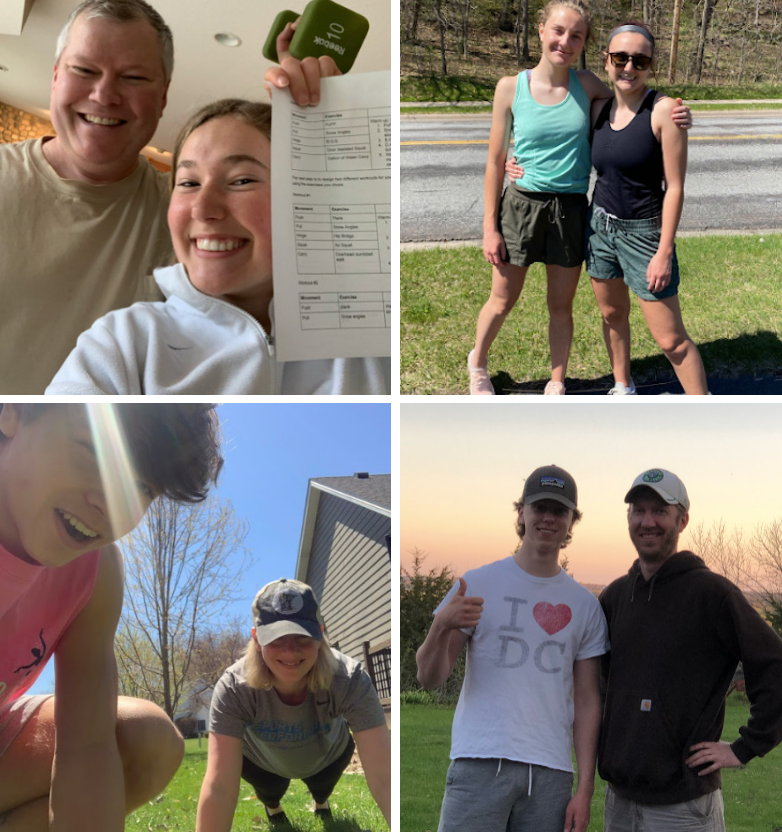
In Jarryd Haag’s PE FLEx, students explored how their gifts can be used in service rather than self-focus. Designing personalized workouts for family members required them to pay attention, encourage, and support others—small but meaningful acts that mirror Christ’s posture. Together, these students discovered that being Christ’s ambassadors often begins with simple, everyday choices shaped by humility and care.
|
|
|
|
Opening Circles with the Throughlines
|
|
|
|
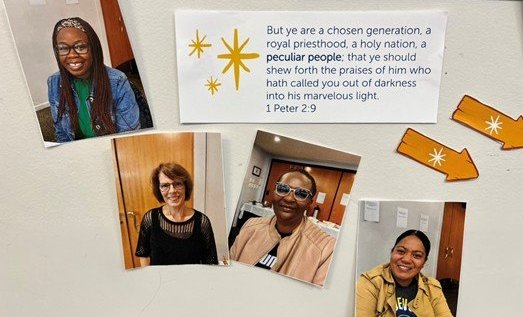
Today’s series continues with ideas for Opening Circles that focus on God Worshipping. As you introduce and focus on God Worshipping, invite students to share their experiences and ideas in explicit worship settings, like church, youth group, devotions, etc. Then, invite students to expand their thinking into other settings, like their sports teams, recess times, chore times, friendships, and families.
|
|
|
|
|
The greetings and initiatives linked in this Bulletin and the next will reinforce this broad definition of “God Worshipping,” a practice that includes all of life.
|
God Worshipping: Learners extend, both in daily tasks and in deliberate times of praise, their words, actions, talents, and thoughts in awe and celebration of God who is worthy.
|
|
|
|
|